Showing posts with label Abreu Fellows. Show all posts

Wednesday, March 23, 2011

ON DOING EL SISTEMA IN ATLANTA

I can't believe a couple of weeks ago marked the six-month anniversary of the first day of Atlanta Music Project classes. Everything is going by so fast! Looking back on my last year and a half, I feel I've come a pretty long way. It turns out the Abreu Fellows Program was an opportunity of a lifetime.

I think back to February of 2009, long before the Abreu Fellows Program existed. I was still in school and visiting Boston for an audition and I distinctly remember telling my cousin and his wife that I wanted to combine my performing with some El Sistema-style educational endeavors. I told my them, if only there was a way I could learn the skills needed to do this. Perhaps I could use a grant-writing course. Maybe I could do a non-profit management seminar. I left Boston brainstorming about doing El Sistema.

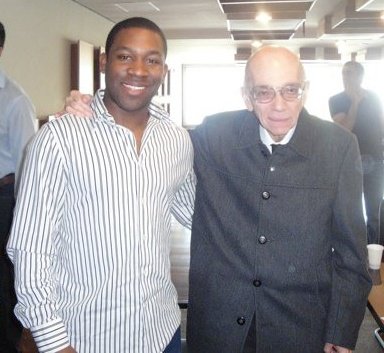
Fast forward four months and Dr. Jose Antonio Abreu (pictured with me at the top of my blog), founder of El Sistema, had won the TED Prize. Subsequently the New England Conservatory announced, per Dr. Abreu's wish, a fellowship program to train gifted musicians and music educators in the El Sistema philosophy, non-profit management, community partnerships and music education. The fellowship even included a trip to Venezuela to study El Sistema up close. Of course, I applied and got a spot in the inaugural class of the Abreu Fellows Program. I called my cousins in Boston to tell them I was moving to their city to do exactly what I had told them I wanted to do not four months earlier.

After graduating from the Abreu Fellows Program in June 2010, the ten Abreu Fellows went about leading an El Sistema-style programs all over the USA. Of course, along with Al Meyers, I co-founded the Atlanta Music Project.

Growing up studying music helped me develop a strong work ethic from an early age, so I found myself quite at home with the busy and hectic schedule offered by the Abreu Fellows Program. It was an intense year, definitely the most I had worked in all my life...until the Atlanta Music Project came along. The joys of running a start-up non-profit include: picking between downtime and no sleep or no downtime and no sleep (I usually pick the former), missing all of March Madness, people asking me why I emailed them at 3:30am, and hoping the other person will pay for that business lunch.

Besides these annoying issues, I can say that I wouldn't trade places with anyone. It's fun as heck. The Atlanta Music Project is fulfilling its mission every day. To see our students developing their musical, social and emotional abilities right before my very eyes is mind boggling. No doubt, this combination of intense musical training and academic tutoring (done by our collaborator, the Atlanta After School All-Stars) is working.

Here are a few highlights on doing El Sistema in Atlanta:

Since moving to Atlanta, I've quickly learned that this is a Coca-Cola town. With its headquarters here in Atlanta, the world's biggest brand has its footprint all over the city, especially when its comes to supporting charitable efforts. The Atlanta Music Project is fortunate to have been awarded a grant from the Coca-Cola Company, which, with generous in-kind donations from our City Of Atlanta Office Of Cultural Affairs, enabled us to launch our program. In July 2010, Coca-Cola invited me to the National Black Arts Festival Gala. I got the chance to meet Atlanta's Mayor, Kasim Reed, for the first time.
Meeting Mayor Kasim Reed for the first time.
Here's some video (courtesy of Armentria Favors of Modern Matter Graphic Design and Art Direction) of our open house, which was held at the end of September 2010 at the Gilbert House, the Atlanta Music Project's first site. People often ask me if we had a recruitment strategy. Well...kind of. Literally 30 minutes before these kids were at our open house, I found them just up the street from the Gilbert House, hanging out in their front yard doing not much. I handed them a flyer for their parents and 30 minutes later they were trying out violins and cellos. It's grassroots, but it worked!


Here I am at CNN studios just before doing a live interview with Ali Velshi about the Atlanta Music Project. You can watch a video of the CNN interview here.
About to start a live interview with Ali Velshi on CNN.
Photo courtesy of Green Theory PR&Marketing.
When I went to Venezuela to observe El Sistema during the Abreu Fellows Program, I visited around 30 music centers, also known as nucleos. They were all very impressive, but some were certainly better than others. I came to the conclusion after much observation, questioning and teaching their students that one thing and one thing only made a nucleo what it was: teachers. If you're building an El Sistema program,  especially with limited resources, your key to success will be your teachers' ability to inspire their students to learn, no matter the circumstance. I feel very fortunate that here at the Atlanta Music Project we have amazing teaching artists. Our teaching artists are talented, dedicated, innovative, cooperative, continuously learning and desire nothing but the best for our students. I should also mention the non-music teachers at the Gilbert House who are responsible for our students outside their AMP music classes. They include the two Gilbert House site managers (Armentria Favors and Emory Clark) and the academic tutors (Gloria Glass and Shanna Baker) from the Atlanta After School All Stars. Together, all these teachers get it. They understand why we all do what we do. Simply put, this team of teachers makes the Atlanta Music Project what it is.
AMP Teaching Artists after Winter Performance
L to R: Dr. Jackie Pickett, Kristen Faust, John Bryant, Bryan Crumpler, Elizabeth Oladele, Jessica Sherer, Aisha Bowden, Dantes Rameau. Photo Courtesy of My True Vision Photography.


Hanging out with Wynton Marsalis after his Jazz At Lincoln Center performance at the Woodruff Arts Center. A big fan of El Sistema, Wynton has been to Venezuela, met Abreu and seen El Sistema for himself. The Atlanta Music Project students also got to meet him and watch his dress rehearsal.
With Wynton Marsalis
Mentoring. Mentoring. Mentoring. This is the reason Gustavo Dudamel and classical music are among the most popular things in Venezuela these days. Every kid in Venezuela knows a kid in their neighbourhood or a distant family member who grew up in an El Sistema program. In Venezuela, being in a youth orchestra is a cool thing to do. At the Atlanta Music Project, we constantly surround our students with talented high school students from the local youth orchestras. I'll never forget the look on the face of one of our trombone students when his trombone mentor walked into the class.  How do you convince an 11-year-old that playing the trombone two hours a day is cool? Have a 15-year-old trombonist tell him so. A few weeks ago we took our students to go see the Atlanta Symphony Youth Orchestra perform at the Woodruff Arts Center. It was great to see our students interacting with their Music Mentors, who they see on a weekly basis at AMP classes.
Atlanta Music Project students hang with their music mentors at the Atlanta Symphony Youth Orchestra Concert.


Below is a picture the AMP students performing as a choir during our Winter Performance at the Museum Bar. Our students are a joy to work with. However, some of them, as we expected, do have some behaviour issues. Not that I blame them, it's amazing to hear what some of them have already gone through at their age. But I'm around them so much that I'm privileged to be able to see all the sides of their personalities.

The instance that most caught my attention in these first months was seeing one of our students, who can come off as particularly hardened, backstage before going out to perform. Here was this kid, one of our bigger ones, who can be quite the bully and troublemaker, scared out of his/her mind to go out on stage to perform. I smiled and said to myself "that's the real him/her." I could see it in his/her face. Behind all that bravado was simply a young child: humbled, intimidated, unpolished, innocent and full of potential.

On doing El Sistema in Atlanta, I always keep in mind that, through music, we're developing the true side of our children.
What it's all about. Led by choir director Aisha Bowden, AMP students perform during their Winter Performance.
Photo courtesy of My True Vision Photography.

Next AMP Concert:

If you're in Atlanta, be sure to come check out the Atlanta Music Project Teaching Artists in concert at the Gilbert House on Thursday March 31 at 6pm. More info here.


Sunday, February 28, 2010

THE SECRET OF EL SISTEMA?


I learned my first important lesson about El Sistema this past week. We all know that "El Sistema" translates to "The System." Well please allow me to reveal to you one of the secrets of El Sistema: There Is No System.

Our camera man Joaquin, who is a native of Caracas, compares this lack of system to the traffic in Caracas. The traffic here is almost always congested. Motorcycles and mopeds can drive between in the lanes legally and pedestrians make frequent and casual appearances in the roads. In some places the traffic is so slow that venders easily walk between the lanes selling everything from car chargers to tupperware.

Now to an outsider like myself it seems like complete chaos, but ask any Caraqueno and they will tell you that every car or motorcycle knows exactly what they're doing and where they're going. How they do it though,  is always changing, reacting in real-time, adjusting to the world around them.

This is how El Sistema functions. It's mission, the democratization of music. Its method, fluid, flexible and always adapting.

So when they told us last week that we would be going to Montalban, the flagship nucleo in Caracas, I was really looking foward to it. Then Monday came and plans changed. Instead of Montalban we went to Rinconada. Apparently Montalban was being fumigated.

On Tuesday I saw my colleague Dan during lunch and he said, "the jazz band at the Simon Bolivar Conservatory has invited us to observe their rehearsal. If you want to go you have to be ready in 2 minutes."

Wednesday it was back to La Rinconada. We had Thursday afternoon off until it was announced, at the last minute of course, that we were going to Montalban to observe their classes. We also went to Montalban on Saturday to watch the orchestra rehearsals but we arrived to find out that the orchestra was departing for an impromptu concert.

All week I heard plans for us to go Barquisimento next week, but everytime I heard about this trip the day changed. I still don't know if we're going. Tuesday is the latest I've heard. We were originally supposed to be in Caracas until about Feb 26. Well, ends up we'll be here until March 4. Why? They haven't told us.

This is "The System." And I think it's beautiful.

I quickly came to terms with the fact that here, writing anything in an agenda is a futile exercise, so now I just keep my  bassoon, camera, note pad, pen and bottle of water ready to go. It's actually quite nice as everyday is a surprise.


So how does this apparent lack of organization help?  I think for one that it helps El Sistema make the most of every opportunity. In a movement that is trying to grow and reach 1 million kids in 5 years, they have to have an organizational structure and mechanism in place that is flexible and adaptable to take advantage of any opportunity: to play a concert at a big event, to take a meeting with a potential community partner or funder or to find a spot for 20 new students in a nucleo.

This kind of thinking helps in the teaching of the the students as well.  For example, we were told at La Rinconada Nucleo that for the string classes there are no set pieces to be played. They have plenty of options for pieces so instead of a strict curriculum, they adjust to the development of each individual class. If the class  moves slower as a group they'll play easier music. If the class loves to play percussive and fast music, they'll play more of that style. If the class needs to work on style perhaps they'll play more Mozart.

And finally this model of flexibility keeps everyone on their toes and motivated. Did  the Montalban orchestra kids know they were going to play a concert yesterday when they arrived at the nucleo? I doubt it, since we were sent there to watch their rehearsal.  That means that students  better be ready to play anytime or anywhere. Responsibility and courage are learned without even being taught explicitly.

Yesterday we were at a function when a few top brass El Sistema employees got a call from Maestro Abreu for something important. They were up and gone in a few minutes. Apparently this happens quite often.  Does this get annoying for them? I'm sure it does, but what a feeling it must be to know that no day at work will be the same and that you're part of something that is moving forward, constantly reshaping itself in order to fulfill its mission.

Yes, the mission. Let's not forget that the El Sistema mission is so clear, and let's be honest, so good, that you can't help but think that while things are a little chaotic there is a goal and everyone involved knows what is being strived for.

Here are some pictures and videos from our activities this week.

Observing a bass and cello class at La Rinconada nucleo. They were working on a two-octave G major scale and a Suite by Jean-Phillipe Rameau. The teacher constantly emphasized to the class that they had to be ready to play, all of them together, when they were instructed to. This is normal, one has to be alert in an orchestra rehearsal.  What stood out for me was how the teacher emphasized that they all had to be ready, so if one person wasn't ready, they would put their instruments down and start the process over. So this process was developing personal responsibility, teamwork and looking out for one another.


With the teacher, Amilcar,  and his bass students from the cello/bass class:


La Rinconada string teacher, Josbel Poche explaining to us the paper orchestra. The paper orchestra, which was started a few years ago because of a lack of real instruments is now a full-fledged part of the initiation to music process (hello Flexibility and Adaptivity!). Before the students can play real instruments, they build an instrument made of paper and materials with their parents. They learn how to care for their instruments, hold them properly, what the different parts are, how to sit in rehearsal and they even "play" the instruments as a piece of music is being played over a stereo system. This process lasts about three months, at the end of which they "perform" a concert. After that they move on to real instruments. Thanks to the paper orchestra, they'll already know how an orchestra rehearsal works and the discipline that comes with it. All that's left is learning to play the instrument.


With Rinconada students Moises (clarinet) and Claudia (bassoon). I worked with Claudia on some Bach Brandenburg, Weissenborn studies and long tones. She sounded great.


Montalban is the flagship nucleo of El Sistema in Caracas. It has more then 1000 students. When El Sistema wants to show off  their program this is where they often bring guests, although I'm sure you could walk into any nucleo and be amazed. They walked us through the building where in every room there  was an ensemble and conductor ready to dazzle us. In all we saw 5 different orchestras. Here's a video of the first stop. You'll recognize the tune: the Finale from Rossini's Overture to William Tell.


El Sistema does jazz. On Thursday we went to see the first and only official jazz band in El Sistema. Most of the students in this band are classically trained and have only been playing jazz for a year and a half. Their director was really adamant that the New England Conservatory send down some of their jazz faculty to work with the ensemble. How do they sound? Check them out playing a Buddy Rich tune:


With the bassoon students from Montalban. Their orchestra was the last stop on the tour of the Montalban nucleo and they played Danzon #2 and Mambo, two pieces that the Simon Bolivar Youth Orchestra are well-known for. Check my earlier blogs for videos of those two pieces.


Here is a video of an early childhood music class. The class includes things like moving to music, singing, acting, note name recognition, improvisation and listening skills. In this video we see body movement, percussion and listening skills all wrapped into one. I like this class because it encourages creativity and expression. The kids can do no wrong, there is no bad answer. What matters is that they come away feeling that music makes them feel good.


Abreu Fellows Lorrie and Rebecca lead a recorder class in an exercise at La Rinconada nucleo:


At Montalban with Abreu Fellows, David, Stan and Jonathan:


I love this last picture below. I took this from inside the courtyard of La Rinconada nucleo. Many of the students at this nucleo live in this neighbourhood of shanty houses in the hills, known as barrios.  It's a great example of bringing the opportunity to play music right to the doorstep of the kids that need it most.

I'll write again pretty soon as there is some great stuff coming up this week: two road trips, another Simon Bolivar concert and some dinners at restaurants or houses.

But then again this is El Sistema, so this could and probably will change.

Saturday, February 13, 2010

THE ABREU FELLOWS AT TED 2010

TED 2010!

This trip lasted barely two days and it went by very fast. The reason the Abreu Fellows (5 out of the 10 of us) were in Long Beach, California was to perform a number on the TED Stage during the TED Prize session. Here's a little background.

TED, which stands for technology, entertainment and design is a non-profit dedicated to promoting "Ideas Worth Spreading." The organization holds conferences all over the world where they gather some of the best and brightest from all fields to speak for about 18 minutes on their area of expertise. No matter who they are none of the speakers are paid and they all get about 18 minutes. Past speakers have included Bill Clinton, Bill Gates, conductor Benjamin Zander, poet and spoken word artist Rives and of course our own Jose Antonio Abreu, founder of El Sistema.

The TED Conference is the main conference and it is held once a year in Long Beach, California. In theory anyone can attend but there is a pretty serious application and a $6000 attendance fee. Despite this the conference sells out very quickly. Founders, CEOs, politicians and celebrities are generally in attendance. Below is a picture of one TED session I attended where they simulcasted the talk of Britain's next Prime Minister (if all goes as planned), David Cameron.


So why the heck were we invited to perform? Well as you all know by now, the founder of El Sistema, Jose Antonio Abreu, won the TED Prize in 2009 and as a result he receieved $100,000 and a wish, which was to launch the Abreu Fellows Program. It is at these yearly TED Conferences that the TED Prize is announced. But before they announce the new TED Prize winner, they look back at previous winners and through speeches, videos and performances they show the audience how the previous winners' wishes are coming along. To show how Abreu's wish was developing they invited the Abreu Fellows do a skit/music performance.

It was a quick six-minute performance and I think it went really well. We got a standing ovation from the audience and lots of great feedback afterwards. I'd like to think that our performing skills are the reason for the positive reception, but I know it has much more to do with the fact that people believe in Abreu's wish.

I've spoken to so many people who tell me something special happened last year at the TED Conference when Abreu gave his TED Talk. TEDsters (people who attend TED) are generally brilliant and successful and they've seen and done it all, but apparently Abreu's talk and wish really made an impact on them last year. Fortunately for the Abreu Fellows Program, people are really behind this wish and want to see it unfold.

So now that I've given you the background here's how it all went down:

Tuesday Feb 9

9pm: We land at LAX. It's my first time in California and I'm happy to see palm trees instead of snow.

11pm: I meet up with my colleague, former school-mate and TED Fellow Robert Gupta for a drink at the hotel.

11:45pm: I walk around Long Beach looking for food. I see TEDsters everywhere.

Wednesday Feb 10

7:30am: I wake-up and head to the Long Beach Performing Arts Center to watch the TED University Talks session.  I'm excited to see Gupta speak and perform there.

8:45am: Gupta's TED Talk. Have you seen the movie "The Soloist" starring Jamie Foxx? The protagonist is the real-life Nathaniel Ayers, a musician who develops schizophrenia and becomes homeless. Gupta is now his violin teacher so his TED talk is about his experience working with Ayers. Gupta also performs some Bach after his talk. Out of all the TED University speakers, Gupta is the only one that gets a standing ovation. He deserves it as he is fantastic. His talk should be available online in the next few months. Bravo Robert!
      Gupta performing some Bach at the TED University Talks session.


10:50am: I'm walking to meet the other fellows. From afar I see a beautiful blonde walking towards me by herself. As she gets closer I glance at her nametag. It says Cameron Diaz. She walks right by me and like an idiot, I say nothing, not even hello.

12:45pm: Rehearsal on the TED stage. The acoustic piano we were supposed to use turns into an electric keyboard. Most of our 30 minute rehearsal time is taken up by the techs trying to get this keyboard to work. Our run-through is mediocre at best so we'd like another go at it. The answer is "sorry, but no." Great...no pressure guys.

4:00pm: Hair and make-up. No seriously, hair and make-up. The make-up artist tells me I have good skin.
4:30pm: Meg Ryan walks by us backstage.

5:00pm: TED Prize session starts. I'm a little nervous but Mark Churchill the director of the Abreu Fellows program is sitting with us in the audience. Seeing a familiar face helps.

5:45ish pm: Our performance. We kill it. The TED audience is great. I'm relieved it went well. People such as Al Gore, Meg Ryan and Bill Gates are in the audience. Our performance was videotaped by TED and I'll post it as soon as we get it.

6:15pm: Jamie Oliver does his TED Talk and announces his wish. Personally I think it's a great wish: "To create a strong and sustainable movement to educate every child about food, inspire families to cook again and empower people everywhere to fight obesity." Check out his TED talk here.


6:45pm We're backstage. Sheryl Crow, who has just performed after Jamie Oliver, congratulates us, the fellows, on our performance. I ask myself what I'm doing here.

7:00pm The fellows and I head to a restaurant for a reception.

7:15pm We meet various people, all ridiculously good at what they do: a co-founder of Skype, a writer/producer for Grey's Anatomy, the President of this and CEO of that. I remind myself to take it easy on the drinks so I don't say something stupid.

8:00pm As we're standing around a table, a rather tall, black guy comes right up to me, shakes my hand and congratulates us on our performance. It's Will Smith. I tell him I'm a big fan. I decline to tell him that I know every line from the Fresh Prince of Bel-Air.  He asks what the long, brown thing was that I was playing. He introduces himself to all of us and chats with us for a few minutes. He is very humble and easy-going. As he leaves, I immediately post to Facebook about the encounter. It pains me to admit it now, but I felt giddy, like a 5-year old in a candy store. I again ask myself what I'm doing here.

11:30pm Block party on the street. I run into a few TEDsters who support the Abreu Fellows program like Carl Haney and Michael Melcher. The band is awesome and people are dancing...as best as a bunch of CEOs and Founders dance.
        With Christine, Stan and Rebecca at the block party.


Thursday Feb 11

7:00am Abreu Fellows Breakfast with TEDsters and supporters of the fellowship. Gupta attends too. I sit beside the President and CEO of Gibson Guitars.

Gupta and I at the Abreu Fellows' Breakfast.

9:00am I start writing emails to all the people I've met to thank them for their support.

12:56pm Catch flight at LAX

My TED experience was unbelievable and I feel priveleged to have been invited. Thank you to Rives, who helped us put together our performance, to Amy Novogratz and Anna Verghese who looked after us from the moment we landed at LAX and to everyone in Boston that watched our practice run-throughs and gave us feedback.

We depart for Caracas, Venezuela this Thursday where the real adventures will start. El Sistema, I'm constantly told, is the real deal and will not dissappoint. I hope so, because I've been bragging about it all year now...You'll hear from me soon.

Thanks for reading.

Saturday, October 17, 2009

Welcome to the Real World Boston: Abreu Fellows Program

Nine Months. Ten Strangers. One house. 24/7. This is the Real World: Boston!


Clearly I've spent too much time watching MTV. But that's what it felt like the morning I walked into the New England Conservatory for the first day of the Abreu Fellows Program. My roommates (Abreu Fellows as well) and I (below)

were greeted in the lobby by Jamie Bernstein, daughter of the famous conductor Leonard Bernstein. Turns out Jamie is producing a documentary about El Sistema USA and so a camera crew followed us around for the entire week. Here's the producers, camera crew and Alvaro, one of the fellows:

I thought, good thing I didn't wear my favorite ensemble: baggy jeans and a college sweatshirt.


This opening week was pretty exciting. Finally meeting everyone involved with the project in person was great. The fact that everyone, from the fellows all the way up to the President of the New England Conservatory is so committed to the cause makes it feel like I've known all these people for much longer than one week.


For example author Tricia Tunstall (above) who will be with us for much of the year to collect research for her upcoming book. She is writing one of the first English books on El Sistema and its growing popularity across the world. No pressure. Oh, and Tricia also happens to teach a mere 40 piano students...

On Wednesday our guest lecturer was Anne Fitzgibbon (above), the executive director of the Harmony Program in Brooklyn, New York. Anne spent a whole year in Venezuela teaching and working with El Sistema. With her hands-on experience she was able to provide us with the history, philosophy and organization of El Sistema. She then spoke about her own program which trains college and graduate level music students as music teachers for economically disadvantaged children. We will be visiting the Harmony Program in Brooklyn in November so I'll be sure to write about it here.


On Wednesday I also met my mentors. Each fellow has a musician mentor and a more business-like mentor to guide and advise us throughout the year. Mine are Martha Katz, viola teacher at the New England Conservatory and Don Jones, Vice President for Institutional Advancement at the New England Conservatory. Don, like me, is an avid sports fan and believes he will convert me from an Ottawa Senators fan to a Boston Bruins fan and from a Pittsburgh Steelers fan to a New England Patriots fan. While that won't be happening, Don, I'll probably be pledging my allegiance to the Boston Celtics pretty soon.


For myself the highlight of the week was the roundtable discussion with El Sistema graduates. These young musicians grew up in Venezuela participating in El Sistema and are now pursuing post-secondary education in music here in Boston. We bombarded them with questions for almost three hours and they patiently and graciously answered all our queries. A couple of things about the "El Sistema ways" from the roundtable stand out for me.


The first is how often the theme of friendship and bonding came up. The graduates mentioned that they had spent so much time together at El Sistema programs that it made the orchestras play better. Yes, they wanted to go to orchestra because it was fun and their friends were there. But it was also this closeness, this obligation to one another that motivated them to practice, which in turn made the orchestra better. No one wanted to let down their friends. One graduate, when we asked what were some of the elements that had to be part of a successful El Sistema inspired program replied that it was all about friendships. He said put your kids on a bus, drive them around for two hours, bring them back to rehearsal and watch them play better. The notion that the entire orchestra is a family and each member has a responsability to the group is a great way of teaching youngsters how to be functioning members of any society. A great example of orchestra skills translating into real life skills.


Another thing that stood out is a little more technical, but it has to do with how the solo parts are handed out in El Sistema Orchestras. If you watch some videos of the El Sistema orchestras you'll notice how big each instrument section is. I wondered how they divide the parts to decide who plays solos? Well it turns out that everyone gets a chance to play the solo parts in rehearsals, and then whoever plays it best or is most comfortable on it gets to play it in concert. Why is this important? For one, there's no need to explain to a ten year old why he/she isn't playing the solo in the concert because the child has gotten the chance to play it at rehearsal and also can see that someone is doing it better. And second and most important, since every player has had the chance to prepare the solos to play them in rehearsal, everyone feels like an asset. This is key to El Sistema: every child must feel like an asset. As Dr. Jose Antonio Abreu says (but he attributes the quote to Mother Teresa) in his TEDPrize speech:

"The most miserable and tragic thing about poverty is not the lack of bread or roof, but the feeling of being no one".


So, of course the El Sistema orchestras are competitve, but everyone is expected to perform to the best of their abilities, leaving no one to feel like they aren't an essential part of the puzzle. Here I am with with three of the El Sistema graduates Alfredo, Jorge and Mariester.


One of our faculty members Maestro Benjamin Zander is the conductor of the Boston Philharmonic and teaches at the New England Conservatory. He is also a well-known author and speaker. His book The Art of Possibility has sold close to a million copies and is translated into 17 languages. During class last Friday Maestro Zander revealed to us that he's been invited to the White House next Friday where he has been granted a few moments to speak with President Obama privately. I don't know what he will talk to the President about but when and if he tells us, I'll tell you!


This next week's curriculum focuses on early childhood music, strategic planning and monitoring and evaluation. These are all big words to me, as my training is primarily in playing the bassoon. But we have great lecturers coming to speak to us and I look foward to sharing with you how it goes.


And lastly, Jose Antonio Abreu, Gustavo Dudamel and the Simon Bolivar Youth Orchestra will be in Toronto the week of October 26, 2009. Abreu will be receiving one of Canada's most prestigious music prizes, the Glenn Gould prize. I'll blog more about it soon but for now please check out the website for this weeklong event.


Saturday, October 10, 2009

What are you doing in Boston?!!!

So that is the question I have had trouble answering in under 10 minutes all summer long! Here then is how I ended up in Beantown and what I'm doing here.

In May 2009 I was still considering pursuing a Doctor of Musical Arts in bassoon performance at a couple of schools in the USA. I just wasn't sure if I could get enough funds to do it. So I waited.

I was hanging out in my hometown (Ottawa) doing...well...nothing, when I got an email from Sue Heineman, the principal bassoonist of the National Symphony Orchestra in Washington D.C. It was about the Abreu Fellows Program at the New England Conservatory. I had been looking for this kind of program for a while. In fact, in all my doctorate application essays I had mentioned the Venezuelan youth education program El Sistema, saying it would be great to have something similar in the USA and Canada (I am Canadian). So here I was, looking at a brand new program that did exactly that. I couldn't believe my luck. From the El Sistema USA website:

"… the first initiative of el Sistema USA — a one-year postgraduate certificate program for accomplished young musicians who desire to become ambassadors of El Sistema and who are committed to developing it outside of Venezuela. Housed at New England Conservatory, Abreu Fellows will spend a year studying between Boston and Caracas, and leave with the tools to return to their communities to teach the El Sistema model."

That was good enough for me. And so, here I am in Boston.

What is El Sistema? Started in 1975 by Jose Antonio Abreu, it is the common name given to the National System of Youth and Children's Orchestras of Venezuela. Government funded and using the symphony orchestra as their vehicle, they provide music education to kids of all backgrounds all over the country.

Watch this great video explaining how El Sistema got to Boston:


And now the why. Why I am I doing this program? I lock myself in a room for hours on end to be a bassoonist right? Well yes, that's true...but

Two reasons in particular made this program worth it for me: under-served youths and symphony orchestras. I've seen many concerts in North America with great orchestras, conductors and soloists but unfortunately there are often empty seats. It's become obvious to me, as I'm sure it has to many others, that more could be done to draw a more diverse and younger audience. How to do that?

Well how about we invest in our youth. Let's make music education accesible to all youths no matter where they're from. Let's make music education a right, not a privilege. This way youths can reap the benefits of music and hopefully when they're older they will become concert-goers, musicians, stage-hands, arts administrators, patrons and aficionados.

Through this program I was offered the chance to hopefully make a positive difference for under-served youths and symphony orchestras. It was difficult to turn down.

Now it's not all doom and gloom for the orchestra world! Besides the fact that symphony orchestras deliver a fantastic product, the El Sistema phenomenon has caught on all over the world and youth orchestra programs often targeting under-served communities are already up and running in Los Angeles, Miami, Baltimore, New York City, Ottawa and more. I simply hope to help continue the trend.

To see the possibilities watch the top youth orchestra in Venezuela perform Leonard Bernstein's Mambo, led by Gustavo Dudamel, an El Sistema graduate and the new conductor of the Los Angeles Philharmonic:


Not too shabby eh/huh?

I'll be blogging about my experiences all year, so please come back and feel free to participate by leaving comments and/or questions. I feel that this type of project benefits us all, so don't be shy!

Imagine a world with millions of kids playing music...

Thanks for reading.